
Gap Between Front Teeth: Close a gap between your front teeth, with or without moving them
A gap between the front teeth is common, and it is a choice whether to close it. If you would like to, there is more than one way.
- Aligners, Bioclear or lab-made veneers
- Options explained
- Downtown Edmonton

Quick answer
How can a gap between the front teeth be closed?
A gap between the front teeth, called a diastema, can be closed by moving the teeth with clear aligners or braces, or by adding tooth-coloured composite to the sides of the teeth with the Bioclear Method. Veneers made by a dental lab are another option when the shape or colour of the teeth also needs to change. Traditional bonding is another option you may hear about, which we can discuss and refer for if it suits you better. The right choice depends on the size of the gap, your bite and your gums. Dr. Rafael Bustamante, a general dentist in downtown Edmonton, explains each option before you decide.
Common causes
Why gaps form
- Teeth that are small for the jaw, including small or peg-shaped side teeth
- Natural spacing, often present since childhood
- Gum and bone loss that lets teeth drift apart
- Habits such as tongue thrusting, or a large tissue attachment between the teeth
Before and after
A gap closure case, completed by Dr. Bustamante
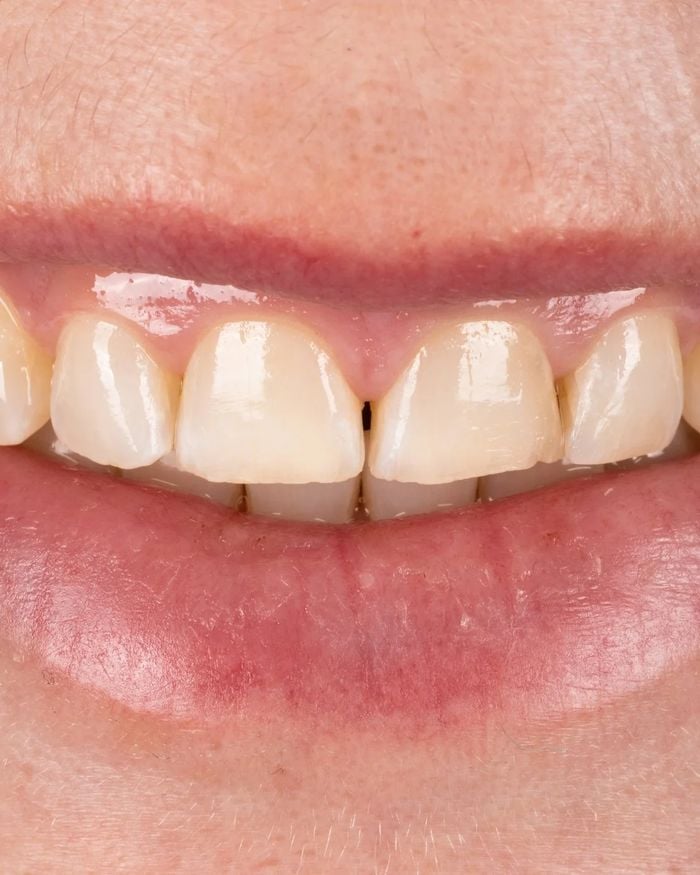
Before 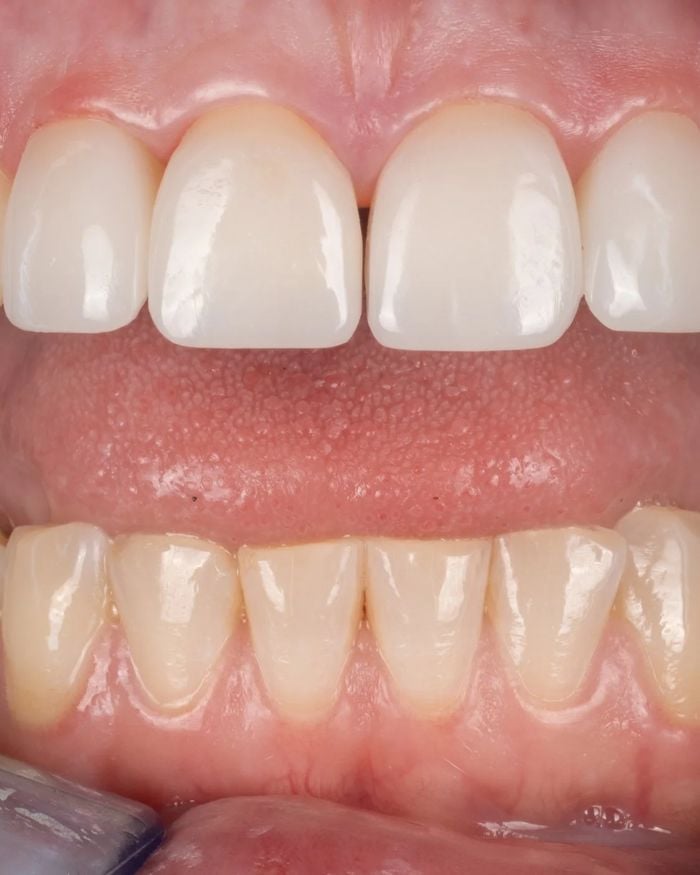
After Gap closed
Individual results vary. A consultation decides which option suits you.
Options
Three ways to close the gap
| Aligners or braces | Bioclear | Lab-made veneers | |
|---|---|---|---|
| How it works | Teeth are moved together | Warmed composite shaped in clear forms on the sides of the teeth | Thin porcelain shells, made by a dental lab, cover the front of the teeth |
| Suits | Gaps with spacing elsewhere, or bite concerns | Small to medium gaps, and small teeth | Gaps where shape or colour also need to change |
| Tooth reduction | None for the aligners themselves | Little or none in many cases, decided case by case | Usually some enamel is removed |
| Things to know | Retainers help keep teeth in place | Teeth become slightly wider, so proportions are planned | Porcelain can chip or crack |
Results vary. Traditional bonding is another option you may hear about, which we can discuss and refer for if it suits you better. For complex bite problems we may refer you to an orthodontist, a recognized dental specialty. Dr. Rafael Bustamante is a general dentist whose practice focuses on restorative and aesthetic dentistry, including the Bioclear Method and root canal therapy, with an emphasis on preserving natural tooth structure.
Peg laterals
Small or peg-shaped teeth
- What they are. Side front teeth that formed smaller or more pointed than usual, often leaving spaces on each side.
- Options. Building the tooth up with Bioclear composite, or a veneer or crown made by a dental lab, sometimes after aligners place the tooth in a better position.
- Planning. We look at the size of each tooth and the space around it, so the result fits your smile.
Bioclear certification is a certificate of achievement, not a specialty.

FAQ
Quick answers
Can a gap be closed without braces?
Often, yes. Small gaps can be closed by adding composite to the sides of the teeth with Bioclear, or with veneers made by a dental lab. Larger gaps, or gaps with bite problems, may be better treated by moving the teeth first.
Is it safe to close a gap with composite?
With Bioclear, composite is added to the tooth, usually with little or no drilling. We check your gums and bite first, because a gap that is getting bigger can be a sign of gum problems.
Will my teeth look too wide?
Adding composite makes each tooth slightly wider. We plan the proportions, and sometimes treat the neighbouring teeth as well so the smile stays balanced.
Can the gap come back after Invisalign or braces?
It can, which is why retainers are worn afterward. Composite can also be used to refine small spaces after aligners.
What is the difference between a gap and a black triangle?
A gap runs the full height of the teeth. A black triangle is a small dark space near the gums, often linked to gum recession or tooth shape.
How long does gap closure last?
We cannot promise a time. Composite can wear, stain or chip, and teeth can shift without a retainer. Regular checkups help.
Talk through your options
We check your gums and bite, explain each option and give you an estimate before you decide.